Protecting Your Rights,
Your Freedom & Your Future
Your Freedom & Your Future
Alabama Criminal Defense Lawyers











Alabama does not have a DMV. The agency that oversees driver licensing is the Alabama State Law Enforcement Agency (ALEA), Driver License Division. ALEA also conducts the post-DUI administrative license suspension hearing.
When people search for the DMV hearing process after a DUI arrest, they are looking for the administrative license suspension hearing. Alabama law provides for this hearing on written request. It is a civil administrative proceeding. It focuses solely on your driving privileges. It is entirely separate from the criminal DUI case in court.
The phrase "DMV hearing" comes from states that use a Department of Motor Vehicles. Searchers reach for several names for the same proceeding: administrative hearing, DMV hearing, DMV hearings, or a DMV court hearing. Some also search for a DMV DUI hearing request. In Alabama, every reference to a "DMV hearing DUI" or a DUI hearing at the DMV actually means the ALEA administrative hearing. That difference matters. The agency you contact, the deadlines you face, and the procedures you follow are all governed by Alabama law. ALEA administers these rules, not a DMV office.
This page explains what triggers the ALEA hearing. It covers how to request one. It describes what happens during the proceeding. It shows why the hearing matters even if you also face criminal DUI charges.

When a law enforcement officer arrests someone for DUI in Alabama, the chemical test results matter. If those results show 0.08 percent or more alcohol by weight in the blood, the officer acts on behalf of ALEA. If the person refuses the test, the officer also acts on behalf of ALEA. Under Alabama law, the officer serves a notice of intended suspension personally on the arrested person.
At the same time, the officer takes possession of any Alabama driver's license the person holds. When the license taken is valid, the officer issues a temporary driving permit. This permit is valid for 30 days after the date of issuance. The officer then forwards copies of the completed notice and permit form, with the license taken, to ALEA within five days. The arresting officer must also send ALEA a sworn report of the arrest within five days, not counting weekends and state holidays. ALEA may not act on a report that is not sworn or does not arrive in that window.
The BAC thresholds that trigger this process depend on the driver's age and license type. Under Alabama law, the BAC level for DUI is 0.08 percent for standard adult drivers. The threshold is 0.04 percent for commercial motor vehicle operators and 0.02 percent for drivers under 21. School bus and day care drivers on duty face anything above 0.02 percent.
The notice of intended suspension is not just a piece of paper. It starts the clock on a hard deadline. The suspension takes effect 45 days after you receive that notice. If you do not request a hearing in time, it moves forward automatically.
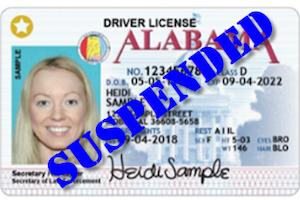
Under Alabama law, any person who receives a notice of intended suspension may request an administrative hearing. The request must be in writing. It must be hand delivered or mailed to the Alabama State Law Enforcement Agency, Driver License Division, in Montgomery, Alabama.
The deadline is strict. The request must be received by ALEA within 10 days of the notice of intended suspension. The request may also be mailed and postmarked within 10 days of that notice. Missing this 10-day window waives the right to an administrative hearing and judicial review. A late request cannot cure that waiver, though an administrative review stays open for up to 90 days after the notice. The commercial implied consent law runs a shorter clock of its own: a commercial driver notified of a suspension or denial must file the request within five days of the date of that notice.
A few key points about the request process:
Drivers may also request an administrative review as an alternative or preliminary step. This review allows the driver to submit sworn statements and other evidence for ALEA to reconsider the suspension determination. A review requested within 10 days of service of the notice is decided before the suspension takes effect. A later request, allowed up to 90 days after the notice, is decided within 30 days of receipt. Like a hearing request, it does not stay the suspension. A person may request and be granted a hearing without first requesting administrative review, but no review is available once a hearing has been held.
The ALEA administrative hearing is a limited-scope civil proceeding. It is not a criminal trial. Under Alabama law, the hearing must be scheduled as quickly as practicable. It must occur no more than 30 days after the request is filed. ALEA designates the hearing location unless the parties agree on a different one. It must provide written notice of the time and place at least five days before the scheduled date. The parties may agree to waive that requirement.
The hearing is conducted before the Secretary of ALEA or a duly authorized agent. It is not conducted before a judge. The hearing officer may administer oaths. The officer may issue subpoenas for witnesses. The officer may compel the production of relevant documents. The officer may require a re-examination of the licensee. The code sets no separate rules of evidence for this hearing. It also states that the Alabama Administrative Procedure Act does not apply to this process.
The scope of this administrative hearing is narrow. Under Alabama law, the sole issues are:
Where the suspension rests on a refusal, that implied consent law sets the issues instead. They are whether the officer had reasonable grounds to believe the person was driving in violation of the DUI statute, whether the person was placed under arrest, and whether the person refused the test on request. Whether the person was warned that refusing would cost the license is expressly not an issue at that hearing.
After the hearing, the hearing officer makes a final determination. The officer either rescinds the suspension order or – for good cause – continues, modifies, or extends the suspension. If a duly authorized agent conducts the hearing rather than the Secretary, the determination is not final until the Secretary approves it.
If the person who requested the hearing fails to appear without just cause, the right to a hearing is waived. The decision is issued in writing and mailed to the person's last known address on file with ALEA.
This is one of the most misunderstood parts of Alabama DUI law. The ALEA administrative hearing and the criminal DUI case are two completely separate proceedings. They run on parallel tracks.
The administrative hearing is a civil proceeding. It addresses only your driving privileges. ALEA's hearing officer decides whether the administrative suspension stands. The burden of proof is preponderance of the evidence – meaning more likely than not. There is no jury. The only question is whether you drove or controlled a vehicle at or above the per-se BAC limit. The only other question is whether you refused the test.
The criminal DUI case is a criminal proceeding in court. A judge or jury decides whether the state proves guilt beyond a reasonable doubt. This is a much higher standard. The criminal case can result in fines, jail time, probation, substance abuse programs, and a separate court-ordered license revocation.
The outcome of one proceeding does not automatically determine the other. A driver could win the ALEA hearing and still face conviction in criminal court. A driver could lose the ALEA hearing and later be acquitted of the criminal charge.
Alabama law does provide one important connection. Under Alabama law, a license suspended administratively for a BAC of 0.08 or more comes back if the criminal case ends without a conviction. If the charge is dismissed or nolle prossed, or the person is acquitted, the Secretary must rescind the suspension order. The Secretary must also remove the administrative suspension from the driving record. An exception exists for persons holding a commercial driver's license or a commercial learner's license, or operating a commercial motor vehicle. A suspension based on a refusal works differently, because there an acquittal only allows the Secretary to reduce the suspension period.
If both the administrative suspension and a criminal conviction occur from the same arrest, the administrative suspension is imposed with credit. The credit covers suspension time already served toward the criminal suspension or revocation period.
Many drivers skip the ALEA hearing because they assume they will lose. That decision could cost more than a license suspension.
The hearing may be your only chance to challenge the suspension before it takes effect. The suspension periods are significant. The length turns on the driver's record of alcohol or drug-related enforcement contacts over the preceding 10 years. With no prior contact, the suspension is 90 days. With one prior contact, it is one year. With two, it is three years. With three or more, it is five years. Those contacts include refusal suspensions and out-of-state DUI convictions, and only one contact per DUI arrest may count. These are minimum periods. Under Alabama law, no driving privilege may be restored during the suspension period, apart from the narrow exceptions the code itself names. One is the rescission and credit rule tied to the criminal case. Another applies when a judge orders a certified ignition interlock device as a condition of bond, which stays the suspension while that bond condition lasts. Reinstatement also requires payment of all applicable reinstatement fees.
Beyond the license itself, the hearing serves other purposes:
Requesting the hearing takes only a timely written request, hand delivered or mailed to ALEA in Montgomery. Failing to request it within 10 days waives both the hearing right and the right to judicial review.
The 10-day deadline to request an ALEA administrative hearing leaves little room for delay. Once that window closes, the suspension moves forward. The right to challenge it through the administrative process is gone.
An Alabama DUI attorney can file the hearing request on your behalf. The attorney can prepare you for the proceeding. The attorney can represent you before the ALEA hearing officer. The hearing also offers a strategic chance. It helps develop evidence and testimony that may strengthen your defense in the criminal case.
Polson & Polson, P.C. handles DUI defense matters in Alabama, including ALEA administrative license hearings. If you have been arrested for DUI, contact the firm promptly to discuss your options before the request deadline passes.

Alabama does not have a DMV. The administrative license hearing after a DUI arrest is conducted by the Alabama State Law Enforcement Agency (ALEA), Driver License Division. This is the proceeding people refer to when they search for a DMV hearing in Alabama. It is a civil proceeding that addresses only your driving privileges.
Under Alabama law, the written request must be received by ALEA within 10 days of the notice of intended suspension. The request may also be mailed and postmarked within 10 days of that notice. Missing this deadline waives the right to a hearing and judicial review. Contacting an attorney as soon as possible after arrest protects this right.
No. The ALEA hearing is a civil proceeding that determines only whether your license suspension stands. The criminal DUI case is a separate court proceeding that may result in fines, jail time, and other penalties. The two cases have different decision makers, different burdens of proof, and different outcomes. Winning one does not guarantee winning the other.
Under Alabama law, the per-se BAC threshold is 0.08 percent for standard adult drivers. Commercial motor vehicle operators face 0.04 percent and drivers under 21 face 0.02 percent. School bus and day care drivers on duty face anything above 0.02 percent. A chemical test at or above these levels triggers the administrative suspension process and may support a criminal DUI charge.


