Protecting Your Rights,
Your Freedom & Your Future
Your Freedom & Your Future
Alabama Criminal Defense Lawyers










A third-offense DUI charge in Alabama creates two separate threats to your driving privileges. The first is an administrative suspension under Alabama's implied consent law. The second is a court-ordered revocation if you are convicted. These two tracks run independently. An administrative suspension can take effect even if you are never convicted. A conviction carries its own three-year revocation under Alabama law.
Under the administrative track, the Alabama State Law Enforcement Agency (ALEA) reviews the arresting officer's sworn report. Your driving record matters. If it shows two prior alcohol or drug-related enforcement contacts within the preceding ten years, you face a three-year administrative suspension. That suspension becomes effective 45 days after you receive the notice of intended suspension.
On the criminal side, a third DUI conviction requires ALEA to revoke your license for three years. A mandatory three-year ignition interlock period follows. It starts only after you serve at least 60 days of that suspension or revocation and the court order, the restricted license, and proof that the device is installed are all in place.
Both tracks can be challenged. The outcomes on each affect your ability to drive. A Birmingham third-offense DUI attorney and drivers license reinstatement attorney can help you get your license back. This applies if your suspension or revocation has already taken effect.
The administrative suspension process moves fast. You must request an administrative hearing in writing within 10 days of receiving the notice of intended suspension. Miss that deadline and you lose your right to a hearing and judicial review. A request for a hearing does not stop the suspension. A separate administrative review of the record stays open for 90 days from the notice, though it does not stop the suspension. Acting quickly is critical.
At the hearing, ALEA must prove one of two things by a preponderance of the evidence. First, that you drove or were in actual physical control of a motor vehicle with a blood alcohol level of 0.08 percent or more by weight. Second, that you refused a chemical test. The hearing statute makes those the only issues, so a challenge has to attack the evidence behind them:
On a third-offense case, the state takes a much firmer stance. The three-year suspension is significantly longer than the 90-day suspension that applies when the record shows no prior contacts. The lawyers who speak for the state are far less willing to deal. So your lawyer starts with the old record. The goal is to check that the state counted those prior contacts right. Your lawyer also looks for mistakes in the way this arrest was handled.
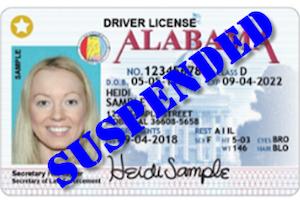
If you are convicted of a third-offense DUI, Alabama law requires ALEA to revoke your license for three years. You may become eligible for an ignition interlock restricted license after serving a minimum of 60 days of actual suspension or revocation.
To receive the restricted license, several steps must occur. The sentencing court must issue a court order authorizing the ignition interlock restricted license. ALEA must receive that order. You must also provide proof that an approved ignition interlock device has been installed and is operational on your designated vehicle. Once ALEA confirms everything, it issues a restricted license. The license shows that you may drive only with the interlock device installed and functioning. The rest of the revocation is then stayed, and it is commuted when you complete the interlock period successfully.
The interlock device is calibrated to prevent starting if your breath sample registers a blood alcohol concentration of 0.02 or higher. This standard is defined in Alabama law. The mandatory interlock period for a third conviction is three years. That three-year clock starts on the date ALEA issues the ignition interlock restricted license. It does not start on the date of conviction.
Driving on the restricted license comes with strict requirements. You must maintain the device and attend regular calibration appointments. You must also comply with all court-imposed conditions. If you fail to maintain the device or fall out of compliance, the court notifies ALEA. Your driving privileges are suspended again until compliance is restored. The court of conviction is the only authority that can confirm to ALEA that you no longer need the interlock.
If the court determines you are indigent, Alabama law provides a process for obtaining interlock services at no cost. These services include installation, lease, calibration, and removal. If you do not own a vehicle and do not have an interlock device installed, you must pay 75 dollars per month. This applies for the entire interlock period unless you receive indigency status.
Whether an acquittal on the criminal DUI charge ends the administrative suspension depends on which ground the suspension rested on. The administrative determination is independent of any criminal adjudication arising out of the same occurrence. The two tracks are separate legal proceedings. They use different standards of proof.
A chemical test showing a blood alcohol level of 0.08 percent or more by weight triggers a rule. If the criminal charge is dismissed or nolle prossed, or you are acquitted, this rule applies. ALEA must rescind the administrative suspension order. ALEA must remove it from your driving record. That rescission does not reach commercial license holders or anyone who was driving a commercial vehicle. An attorney files the necessary documentation with ALEA to trigger that rescission and get the license returned.
A breath test refusal case works differently. The administrative suspension for a refusal rests on the refusal itself. It does not rest on a BAC result. An acquittal on the criminal charge does not require ALEA to rescind the suspension, though ALEA has discretion to shorten it. You may be subject to the full balance of the three-year administrative suspension. The hearing on a refusal suspension turns on whether the officer had reasonable grounds to believe you were driving under the influence, whether you were placed under arrest, and whether you refused the test. Whether you were warned about the consequences of refusing is not an issue.
If the full suspension period has already run its course, the next step is formal reinstatement through the state. The section below walks through that process.
Once the suspension or revocation period ends, your license does not come back on its own. You must satisfy every reinstatement requirement ALEA imposes before you can legally drive again. A drivers license reinstatement lawyer handles this process from start to finish. Most of that work is paper, phone calls, and follow-up.
Reinstatement after a third-offense DUI conviction usually takes several steps. First, clearance of all suspensions and revocations on your record. Second, proof that you successfully completed a DUI or substance abuse program as required by Alabama law. Third, payment of reinstatement fees. Fourth, filing of an SR-22 certificate of financial responsibility, which you must then keep in force. Fifth, confirmation from the sentencing court that the ignition interlock requirement has been satisfied, where applicable.
A drivers license reinstatement attorney reviews your state driving record for errors that could block reinstatement. State records sometimes show holds from other courts, from child-support offices, or from other states. A single unresolved hold can prevent reinstatement even after you have completed every DUI-related requirement. Your lawyer lists each hold. Then your lawyer finds out what it takes to clear it. Then your lawyer deals with each office for you.
When the state treats the license as revoked rather than suspended, the license reinstatement process may require additional steps. A revoked license lawyer works with the sentencing court and the state. The lawyer confirms that the revocation period has been served. The lawyer confirms that all statutory conditions are met. In some situations, a revoked license reinstatement attorney may need to petition the court to amend its original sentencing order. For example, the attorney may correct an error in the interlock period. The attorney may also confirm early eligibility.
Look for a lawyer who knows both the state's forms and the local courts. That matters if you need help getting your license back after a third-offense DUI. Birmingham drivers gain from a lawyer who deals with the ALEA Driver License Division often. Your lawyer should also know how Jefferson County courts handle the orders the state asks for.
Here is what the process tends to look like from your side. The first call is short. Your lawyer asks for the date of the arrest, the court, and any notice you were handed. Then your lawyer pulls your driving record and reads it line by line. That record is the map. It shows what the state still has open on you. Some of what it shows is out of date.
It helps to gather a few things before that first call. Bring the notice from the arrest. Bring any court papers you were handed. Bring proof of any class you have finished. Bring the name of your interlock provider, if you have one. Bring any letter the state has mailed you. None of it has to be in order. Your lawyer can sort it.
Lawyers for license reinstatement spend most of their time on records and on phone calls, not in a courtroom. Much of the job is making sure the right form reaches the right desk. A driver's license reinstatement attorney can also tell you what is still open and in what order to clear it. That order matters. Taking the holds in the wrong order can mean doing the same work twice.
Waiting is the most common mistake. Every week you sit on the notice is a week you are not driving. No lawyer can make the state move faster than it moves. What a lawyer can do is make sure nothing in your own file gives the state a reason to stop. One habit helps more than any other. Keep every piece of paper the state sends you, and snap a photo of it the day it lands. A lost envelope is slow and awkward to replace.
Several circumstances can increase the penalties you face on a third-offense DUI. Some directly affect the length or conditions of your license suspension.
If you are over 21 and a child under 14 was a passenger at the time of the offense, Alabama law requires the court to impose at least double the minimum punishment. On a third offense, that doubles the minimum punishment the court would otherwise impose. A finding of 0.15 percent or more by weight of alcohol in your blood carries the same doubling. The statute specifies that neither enhancement applies to the duration of the ignition interlock requirement. But the doubled minimum penalties make the overall consequences significantly more severe.
If the DUI involved an accident causing injury, you could face a separate assault charge. If that charge is a felony and a vehicle was used in committing it, ALEA must revoke your license on that conviction. This revocation goes beyond what the DUI conviction alone requires. If an accident resulted in a death, you could face a homicide charge. ALEA is required to revoke the license of anyone convicted of homicide by vehicle.
Leaving the scene of an accident adds another layer. Mandatory license revocation also applies if you fail to stop, render aid, or identify yourself in an accident resulting in death or personal injury.
A second DUI within a 10-year period also reaches your vehicle registration. The Alabama Department of Revenue suspends the registration of every vehicle you own for as long as your license is suspended. That does not apply if you keep a functioning interlock device on the designated vehicle, or if losing the registration would impose an undue hardship on someone else who is completely dependent on the vehicle for the necessities of life.
A fourth DUI conviction within the statutory period elevates the charge to a Class C felony. A felony DUI conviction carries a five-year license revocation. It also requires a four-year ignition interlock requirement and a minimum one-year hard suspension before interlock eligibility.

A third-offense DUI puts your driving privileges at risk on two fronts at once. A DUI defense attorney handles the license side from the day of the arrest. That means demanding the administrative hearing within the ten-day window. It means challenging the evidence ALEA relies on to impose the three-year suspension. It means keeping every option open for getting you back on the road.
On the criminal side, an attorney negotiates sentencing orders with interlock eligibility in mind. The court order must be drafted correctly and transmitted to ALEA. Errors in the order can delay or block the interlock restricted license entirely. Your lawyer works between the sentencing court and the state. The job is to make sure the paperwork reaches the right office in the right form.
Driving without a valid license while under a DUI suspension brings its own charge. Learn more about DUI without a license charges and how the two cases interact.
Polson & Polson, P.C. handles DUI defense matters in Jefferson County. The firm knows how Birmingham courts and the state handle third-offense DUI license cases. Every case is different. Outcomes depend on the specific facts of your situation.
If you are facing a third-offense DUI charge in Birmingham, your license is at stake on both the administrative and criminal tracks. You may need to fight the administrative suspension. You may need to apply for an ignition interlock restricted license. You may need to reinstate a suspended or revoked license. Polson & Polson, P.C. may be able to help.
Call (205) 401-3171 for a free consultation. Payment plans are available. The sooner you act, the more options may be available depending on your circumstances.

A third-offense DUI triggers two possible suspensions. The three-year administrative suspension applies if your record shows two prior alcohol or drug-related enforcement contacts within the preceding ten years. A criminal conviction carries a separate three-year revocation. Time served on the administrative suspension counts toward the criminal revocation when both arise from the same arrest.
A license reinstatement attorney can help you get your license back. The attorney reviews your ALEA driving record and identifies all holds and outstanding requirements. The attorney coordinates with the sentencing court to confirm completion of the interlock period and DUI program. The attorney files the necessary paperwork with ALEA and resolves issues that could block reinstatement. The process runs through several offices. Errors or missing papers can cause long delays.
Alabama law permits application after serving a minimum of 60 days of actual license suspension or revocation. You need a court order from the sentencing court. You also need proof of installation of an approved ignition interlock device. ALEA must issue the restricted license. The three-year interlock period begins on the date ALEA issues the restricted license.
ALEA requires clearance of all suspensions, revocations, cancellations, and denials on your record. You must show proof of completion of the court-ordered DUI or substance abuse program. You must also provide an SR-22 certificate of financial responsibility and payment of reinstatement fees. Where applicable, you must provide confirmation that you have completed the ignition interlock requirement. A lawyer can help identify and resolve any holds on your record.
The administrative suspension for a breath test refusal is independent of the criminal case. An acquittal does not require ALEA to rescind a refusal-based suspension, though ALEA has discretion to shorten it. You may be subject to the full three-year administrative suspension. The refusal hearing turns on whether the officer had reasonable grounds to believe you were driving under the influence, whether you were placed under arrest, and whether you refused the test.
You can deal with the state on your own, and many people do. A lawyer earns the fee when the record is messy. Holds from other courts, old cases, and paper that never reached the right desk are the usual reasons a file stalls. A lawyer reads the whole record first, then works the holds in order. You also get one person to call when things go quiet.
Start with lawyers who appear in the courts that handled your case. Ask how often the office does license work with the state. Ask who will make the calls. Ask what the fee covers and what it does not. Ask what the office will need from you, and when. A short phone call tells you most of what you need to know.


