Protecting Your Rights,
Your Freedom & Your Future
Your Freedom & Your Future
Alabama Criminal Defense Lawyers











A criminal defense attorney's primary duty is to zealously defend every client. Under the Alabama Rules of Professional Conduct, defense counsel owes you representation that is diligent, loyal, and confidential. Those duties start the moment the lawyer takes your case. The duty exists for a reason. The State has to prove every part of the charge beyond a reasonable doubt. The client does not have to prove innocence. The State must first establish a prima facie case, with all elements of the crime proven by competent evidence. That duty does not shift with the type of charge. The client who starts out searching for a theft defense lawyer near me is owed the same diligence, whether the charge is a misdemeanor or a felony.
In Alabama, criminal defense comes in three forms. Each one shapes how the duty to zealously defend plays out in practice.
Retained private counsel. A defendant who hires a private lawyer chooses counsel based on experience, practice focus, and comfort level. Polson & Polson, P.C. attorneys focus on Alabama criminal defense and are available for a free initial consultation. In Alabama, only those licensed through the Alabama State Bar can serve as legal counsel. You can check any private lawyer's standing at that link. Before you hire, ask how long the lawyer has handled criminal cases in your area. Ask about both state and federal courts.
Appointed counsel. A defendant who cannot afford a lawyer still has a right to one. Under Alabama law, when the trial court determines a defendant is indigent and the right to counsel has not been waived, the court provides defense services. That may mean appointed counsel, contract counsel, or a public defender. Appointed counsel has the same duty as any other lawyer. Appointed counsel must "represent and assist the indigent defendant to the best of his or her ability." The lawyer's pay source does not change what the client is owed.
Self-representation. A person has the right to represent himself or herself. Abraham Lincoln is often quoted as saying that a person who serves as his own lawyer has a fool for a client. One practical reality supports that advice. Appeals after pro se trial convictions succeed at very low rates. People who go it alone give up the protections that come with trained, zealous advocacy.
Appointed attorneys are typically paid less than private attorneys. The state's main goal is that a person has a lawyer at all, not that the lawyer has a light caseload. In large metro counties like those around Birmingham, state-paid lawyers often carry heavier caseloads than private defense attorneys. That workload can reduce the time available for client meetings, independent investigation, and motion practice.
Experience level may also be a concern. A recent law school graduate may have less practical criminal defense experience than a lawyer with years of trials behind them. Some private lawyers take appointed cases to supplement their income but spend most of their hours on personal injury, divorce, or other non-criminal matters. Serious charges – felony drug crimes, sex crimes, or violent domestic violence cases – can bring long jail time after a conviction. The stakes demand full preparation.
The duty to zealously defend applies equally to appointed and retained counsel. Appointed counsel must "represent and assist the indigent defendant to the best of his or her ability." A retained attorney owes the same standard. But structural limits can affect how fully that duty is carried out. Appointed lawyers may have less access to investigators and expert witnesses. Under Alabama law, fees and expenses for experts and investigators must be approved in advance by the trial court. Waiting on that approval can slow the defense or cap its resources.
Alabama's Office of Indigent Defense Services oversees the system that provides counsel to defendants who qualify. Under Alabama law, the trial judge determines indigency based on the defendant's disposable net income, the nature and liquidity of assets, and the nature of the offense. Income at or below 125 percent of the federal poverty guidelines ordinarily qualifies. Between 125 and 200 percent, the court must make a written finding of substantial hardship. Once appointed, defense counsel should still review the police records thoroughly. Counsel should ask questions that bring out possible defenses. Counsel should identify the strengths and weaknesses in the State's case. A criminal defense lawyer who listens closely to the client's account – whether retained or appointed – is fulfilling the core duty of a zealous defense.

A knowledgeable criminal defense lawyer must thoroughly investigate the facts of the case. That means talking to the witnesses who form the foundation of the State's prosecution, starting with the arresting officer. Many criminal cases involve "forensic evidence." That can mean fingerprint evidence, DNA matching, or an implied consent post-arrest breathalyzer test or blood sample in a drunk driving case. The defense may need one or more expert witnesses to answer the State's experts. Those witnesses for the State should be questioned before trial. Our firm has handled more than eight thousand DUI cases in seventy years of combined practice. In this field, the same witnesses come up again and again.
The duty to zealously defend rests on several core principles drawn from the Alabama Rules of Professional Conduct. Alabama's diligence rule bars defense counsel from willfully neglecting the case. Counsel should pursue the client's cause with commitment and zeal. Counsel must also be competent, with the legal knowledge, skill, and preparation the case demands. Information relating to the representation is confidential, subject only to the narrow exceptions the rules allow. And the lawyer owes undivided loyalty. That means no conflict of interest that could weaken the defense.
Day to day, zealous defense means conducting an independent investigation instead of trusting the State's version of events. It means reading every page of discovery. It means filing pretrial motions to suppress unlawfully obtained evidence. It means testing the State's witnesses on cross-examination. When plea negotiations begin, a zealous advocate negotiates from a position of preparation. The goal is not to push the client to take whatever the prosecutor offers. The attorney should promptly convey each plea offer to the client with honest advice about the risks of trial versus the terms of the deal.
A zealous defense has limits. A defense lawyer cannot help a client commit perjury or assist in any ongoing criminal conduct. The duty is to test the State's case by every lawful and ethical means available. It is not to fabricate evidence or mislead the court.
When searching for a theft defense lawyer near me, Alabama residents should look for lawyers who handle the full range of theft charges. Alabama classifies theft by the value of the property taken. The higher the value, the more serious the charge. Under Alabama law, first-degree theft of property applies when the value is more than two thousand five hundred dollars. It also applies when property is taken from the person of another. It applies to the theft of a motor vehicle regardless of value. And it applies to a common plan or scheme to resell stolen property when the aggregate value reaches one thousand dollars within a 180-day period. First-degree theft of property is a Class B felony. Theft of lower-value property falls in a lower classification, but it can still leave you with a criminal record.
The "near me" part matters in theft cases. A lawyer who practices regularly in your district and circuit courts knows how the local prosecutors handle theft charges. That lawyer also knows the procedures those courts follow. Availability for hearings and trial dates matters a great deal.
The duty to zealously defend applies squarely to theft cases. A careful lawyer will press the State on valuation, on identification of the accused, on proof of intent, and on the chain of custody for the recovered property. A zealous advocate will not treat a theft charge as a routine plea. The advocate asks first whether the State can prove each part of the charge beyond a reasonable doubt.

Most speeding citations in Alabama are handled routinely. But Alabama law treats a violation of the rules of the road as a misdemeanor, not a civil infraction. Certain conduct involving excessive speed carries much heavier exposure. Reckless driving is one example. It is a misdemeanor carrying up to 90 days in jail on a first conviction, plus a criminal record, license consequences, and significant insurance impacts.
A criminal speeding attorney treats these charges differently than routine traffic violations. Speeding offense lawyers begin by examining how the officer measured the speed. That means requesting the calibration records and the training certifications. It means watching the dashcam or body camera footage. If the State cannot prove the speed allegation reliably, the defense has grounds to challenge the charge. Jail exposure and a lasting criminal record are serious consequences. Pleading guilty without investigation falls short of the duty every defense lawyer owes.
Most people who search for a skilled criminal defense attorney near me are asking two plain questions. Can this lawyer handle my kind of charge? And will this lawyer be in my courthouse when the case is called?
Both questions tie back to the duty to zealously defend. A lawyer who knows the charge can spot the weak links in the State's proof. A lawyer who is in that courthouse often knows the judge's calendar, the prosecutor's habits, and how long a case like yours tends to take.
A few things are worth asking on the first call. How many cases like mine have you handled? Who will stand with me in court? How will you keep me posted? What will this cost, and how is the fee set? An experienced attorney will answer all four plainly, and the answers tell you more than any slogan.
The duty to zealously defend includes keeping the client informed at every stage. A criminal defense attorney should return calls quickly. The lawyer should explain new developments as they arise and give clear guidance at each decision point. Those habits are direct expressions of the diligence and communication duties defense counsel owes under the rules of professional conduct.
Conversations between attorney and client are confidential, apart from the narrow exceptions the rules allow. Sometimes there is nothing new to report until the prosecutor turns over the discovery documents and video recordings. Long periods of inactivity may occur, and your lawyer should explain why. Since COVID, courts have also had to shift schedules and procedures, which can add delay.
Under the rules of professional conduct, a defense attorney should promptly tell the client the substance of any offer from the State. The narrow exception is a proposal the client has already made clear would be unacceptable. These offers may involve reduced charges, dropped counts, or a plea deal. The client makes the final call on whether to accept or reject any deal. A defense lawyer who prepares well puts the client in a stronger position during those negotiations.
If the case goes to trial, your lawyer acts on your behalf throughout the proceeding. Your lawyer will object to improper questions, cross-examine the State's witnesses, and challenge the evidence presented. The goal is not to prove innocence. It is to hold the State to its burden of proof and expose weaknesses in the prosecution's case.
Polson & Polson, P.C. focuses on criminal defense across Alabama, with seventy years of combined practice. The firm handles felony charges and misdemeanor cases alike. That work includes drug crimes, DUI, domestic violence, sex crimes, theft, assault, and federal criminal matters. You can read about prior case results on the firm's website, with client names kept anonymous.
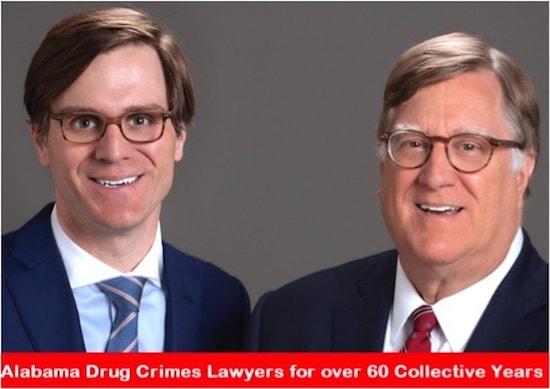
If you want a skilled criminal defense attorney in Alabama, call Polson & Polson, P.C.'s office at (205) 871-8838 for a free consultation. Payment plans are available, and the firm knows that no one plans to be arrested.
Polson & Polson, P.C. offers payment plans. Fee arrangements are discussed at the free initial consultation, so you know what to expect beforehand. Cost should not be the one thing that keeps you from getting legal representation when your freedom is on the line.
If you are facing criminal charges in Alabama, early representation gives your lawyer more time to investigate the facts, preserve evidence, and build a defense. Polson & Polson, P.C. offers a free, confidential consultation to people charged with crimes across the state. That includes theft charges and criminal speeding matters.
When you call, have these on hand if you can: your charging papers, your next court date, and any bond paperwork. That helps your lawyer evaluate the case quickly. Contact Polson & Polson, P.C. at (205) 871-8838 or through the firm's contact page to set up your consultation. Every case is different, and the result depends on the facts of that case.
Zealous defense means your lawyer uses every lawful and ethical route to protect your rights. That includes independent investigation, a thorough review of the State's evidence, pretrial motions, cross-examination, and honest advice about plea offers versus trial. The duty applies whether counsel is hired privately or appointed by the court.
Start with lawyers who focus on criminal defense and handle theft cases regularly in your local courts. Check that the lawyer is licensed through the Alabama State Bar. Ask how many theft charges like yours the lawyer has handled. Ask whether the lawyer knows the prosecutors and the procedures in your county.
In Alabama a speeding ticket is itself a misdemeanor under the rules of the road, though most are resolved with a fine and without a criminal attorney. But if the conduct is charged as reckless driving or another crime, you could face jail time, a criminal record, and serious license consequences. A lawyer can evaluate the charge and determine whether the State's evidence supports it.
Yes. Under Alabama law, appointed counsel must represent the defendant "to the best of his or her ability." The duty to be diligent, competent, and loyal does not change with how the lawyer is paid. But structural factors like caseload and limited resources can affect how much time an appointed lawyer has.
Bring any charging papers, your next court date, and bond paperwork. Bring anything else tied to the case, such as police reports or letters from the court. Write down your account of what happened while it is fresh. A lawyer who has all of it at the outset can build a stronger defense.


